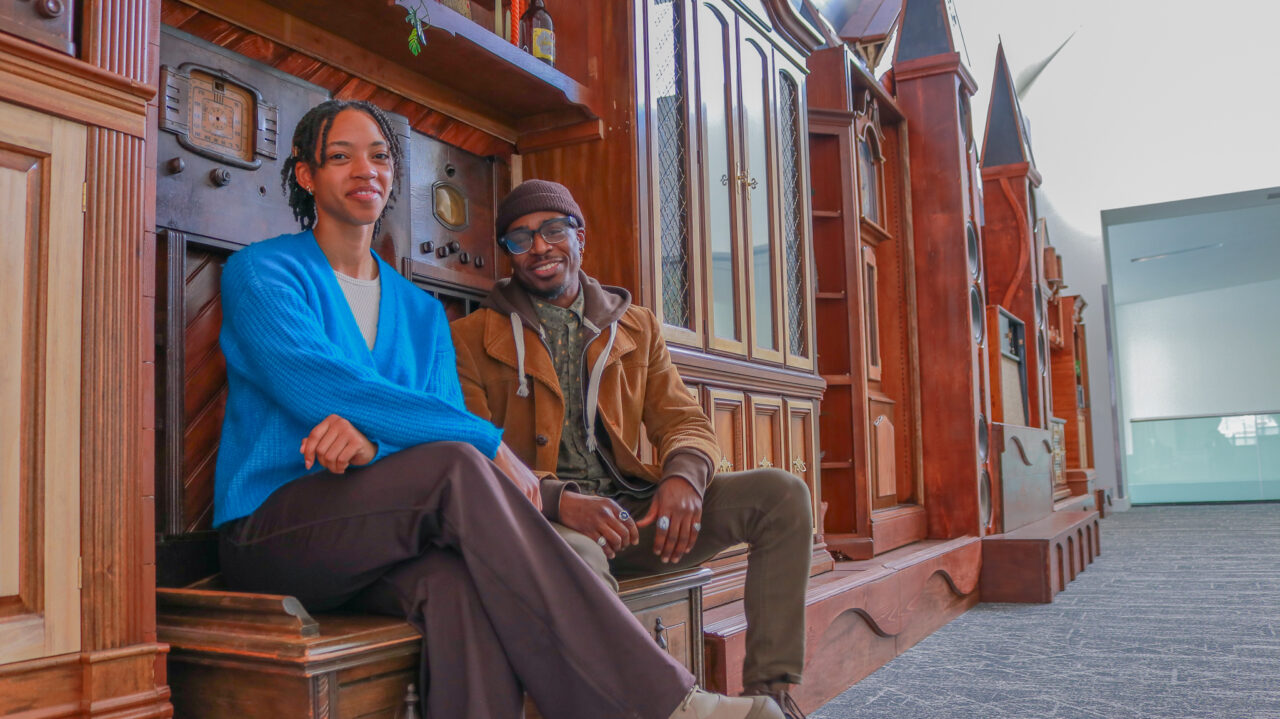

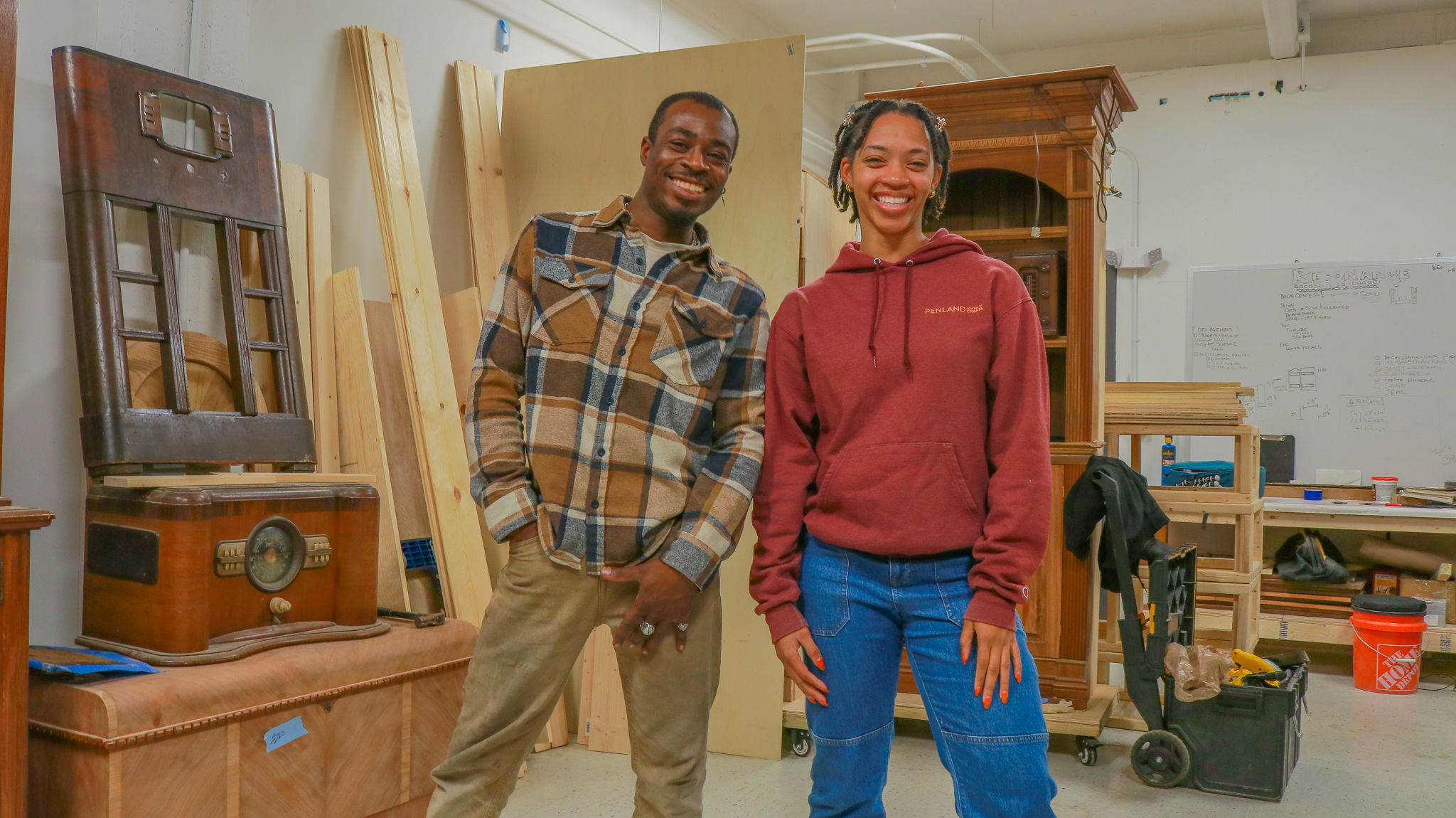
 When Sheridan Davenport and Jordan Harris first walked into Building Value, they were doing what so many artists and designers do here. Browsing and gathering materials for a new collaborative project that would eventually become Resonance. Sheridan — a graphic designer and professor at Xavier University — and Jordan, a mixed-media artist, interior designer, and master craftsman — were focused on what was ahead.
What they didn’t expect was to quite literally stumble into their own past work. Sitting in the store was our current coffee station: a custom-built table made from reclaimed wood and metal, salvaged from a small local postal service business. Until that moment, its origins were a mystery.
Then came the realization: Jordan had built it years earlier. And the logo embedded in the piece? Designed by Sheridan. Two collaborators, unknowingly reunited with a piece of their shared creative history, right in the middle of a reuse store devoted to second lives and second chances. That serendipitous encounter didn’t just make for a great story; it sparked a deeper connection.
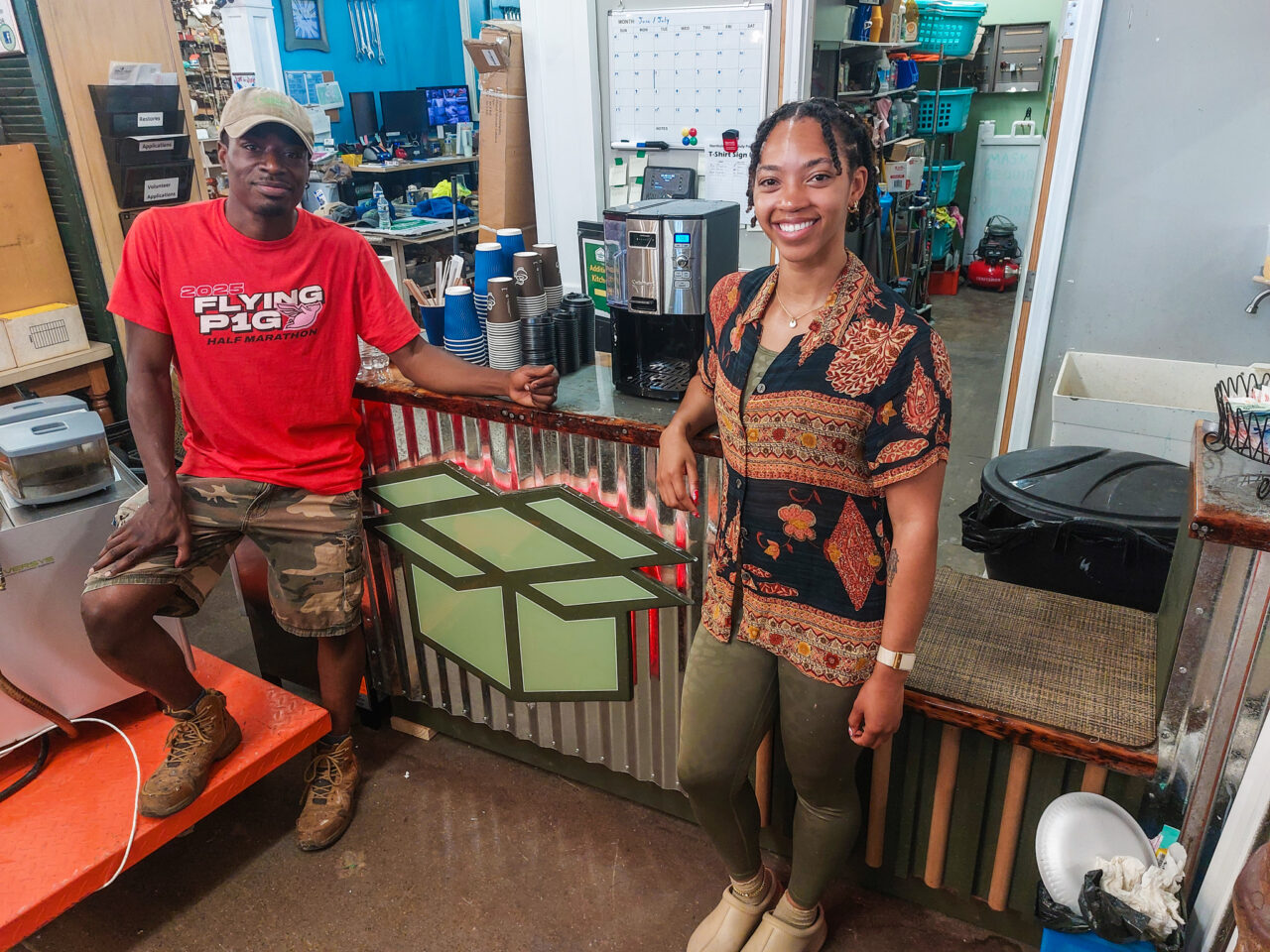 As Resonance took shape, Building Value became a key source of salvaged materials, grounding the project in the same principles of reuse, memory, and material storytelling that had brought them back together in the first place. Supported by Black Art Speaks, the two visionaries set out to create a public artwork that honored Cincinnati’s musical legacy while embracing reuse and community storytelling.

The Spark & the Build
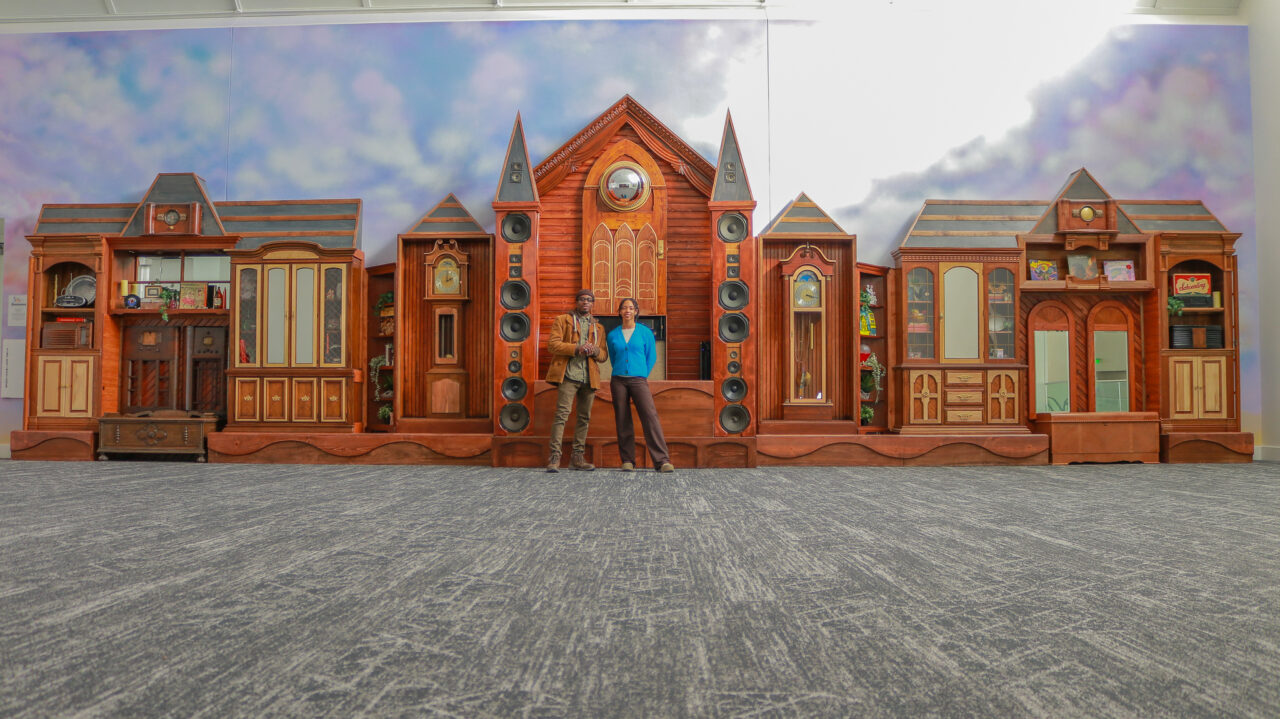
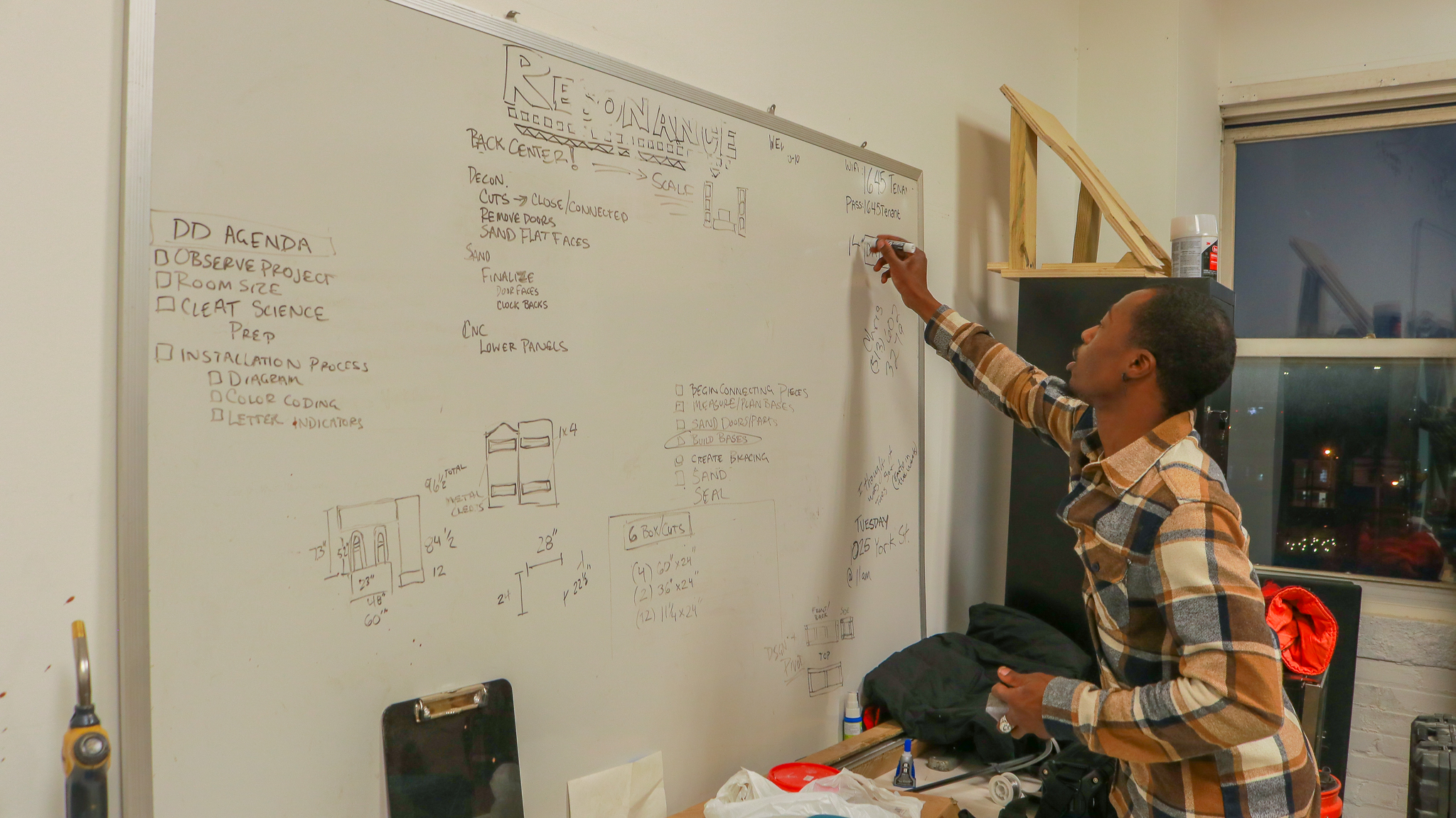
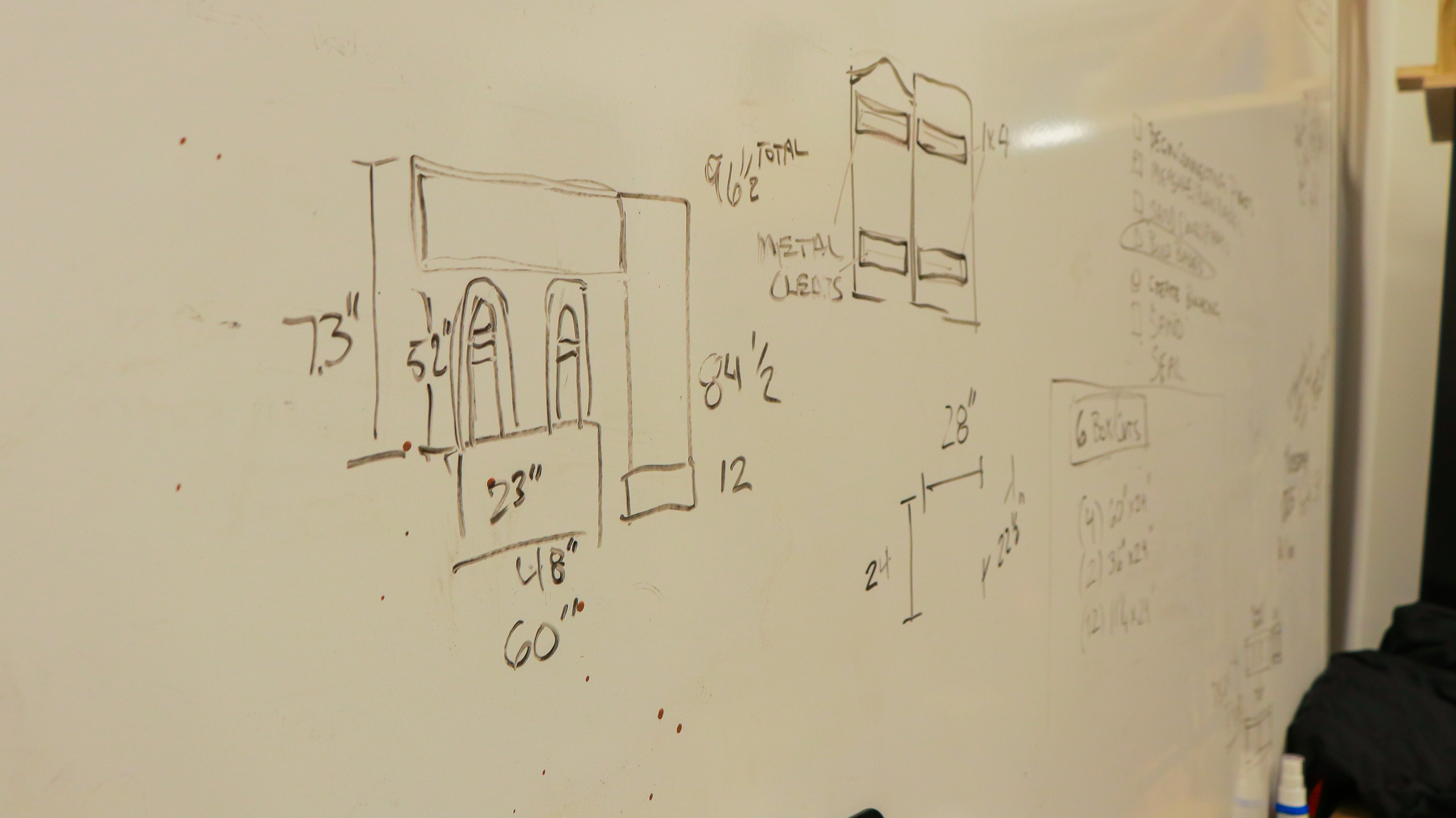
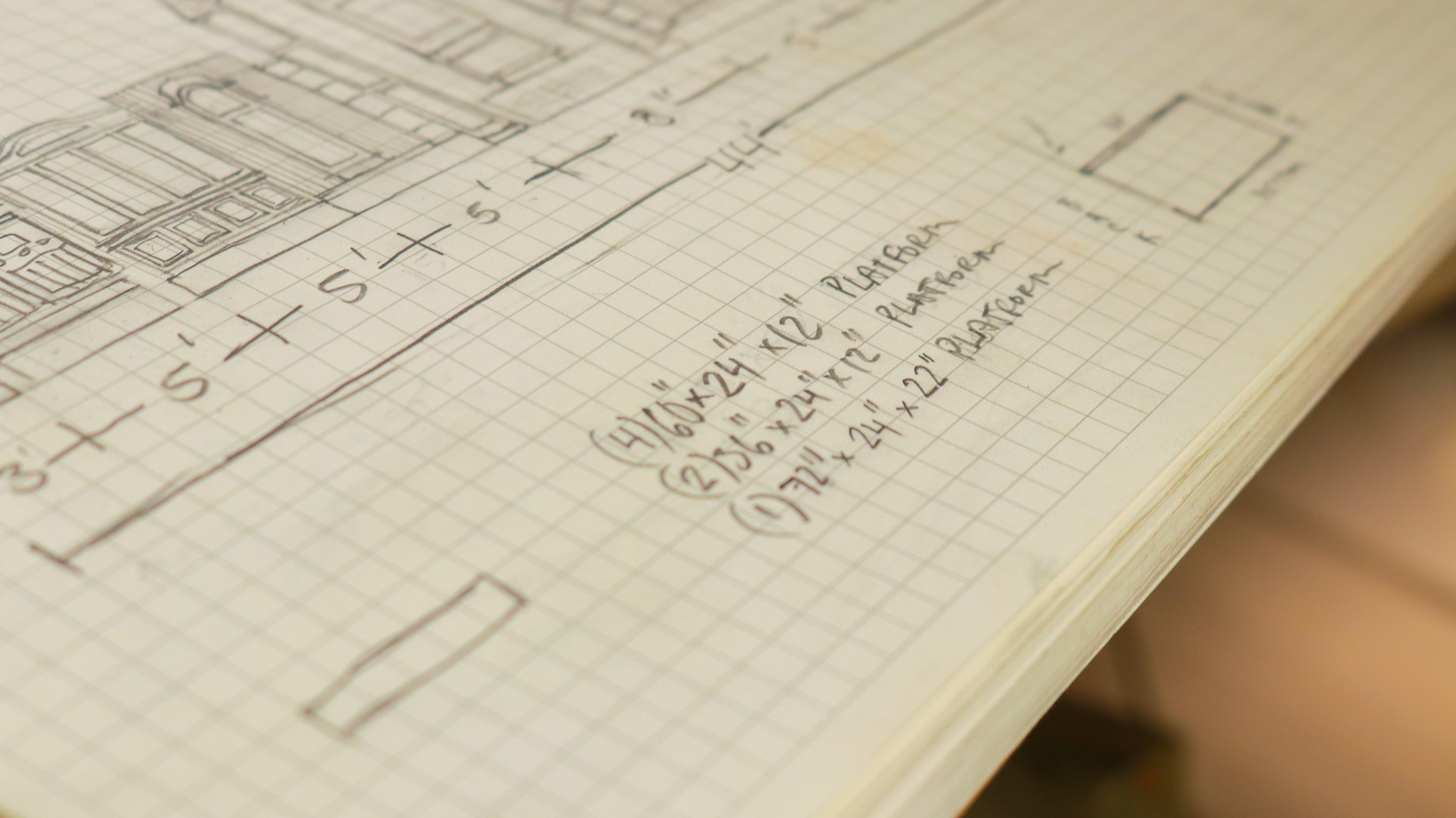
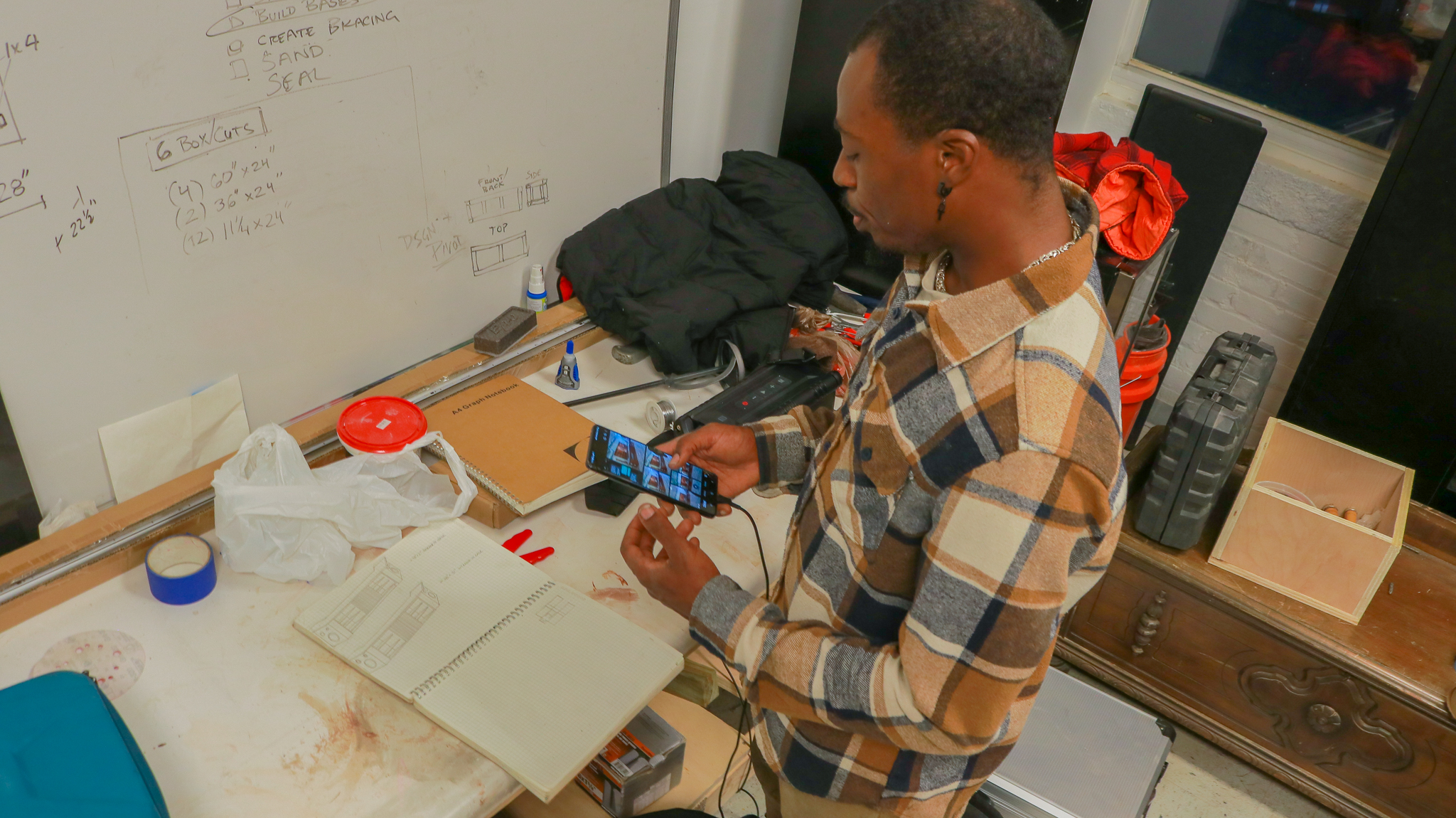
 Sheridan’s original concept drew inspiration from Cincinnati Music Hall—its arches, symmetry, and deep connection to the cultural life of the city. From there, Jordan helped translate that vision into something physical: turning drawings into dimensions, and ideas into a structure people could stand in front of, walk around, and feel.
As the design evolved, the artists pushed beyond aesthetics, asking not just what the piece should look like, but what stories it should hold. That question guided every decision that followed.
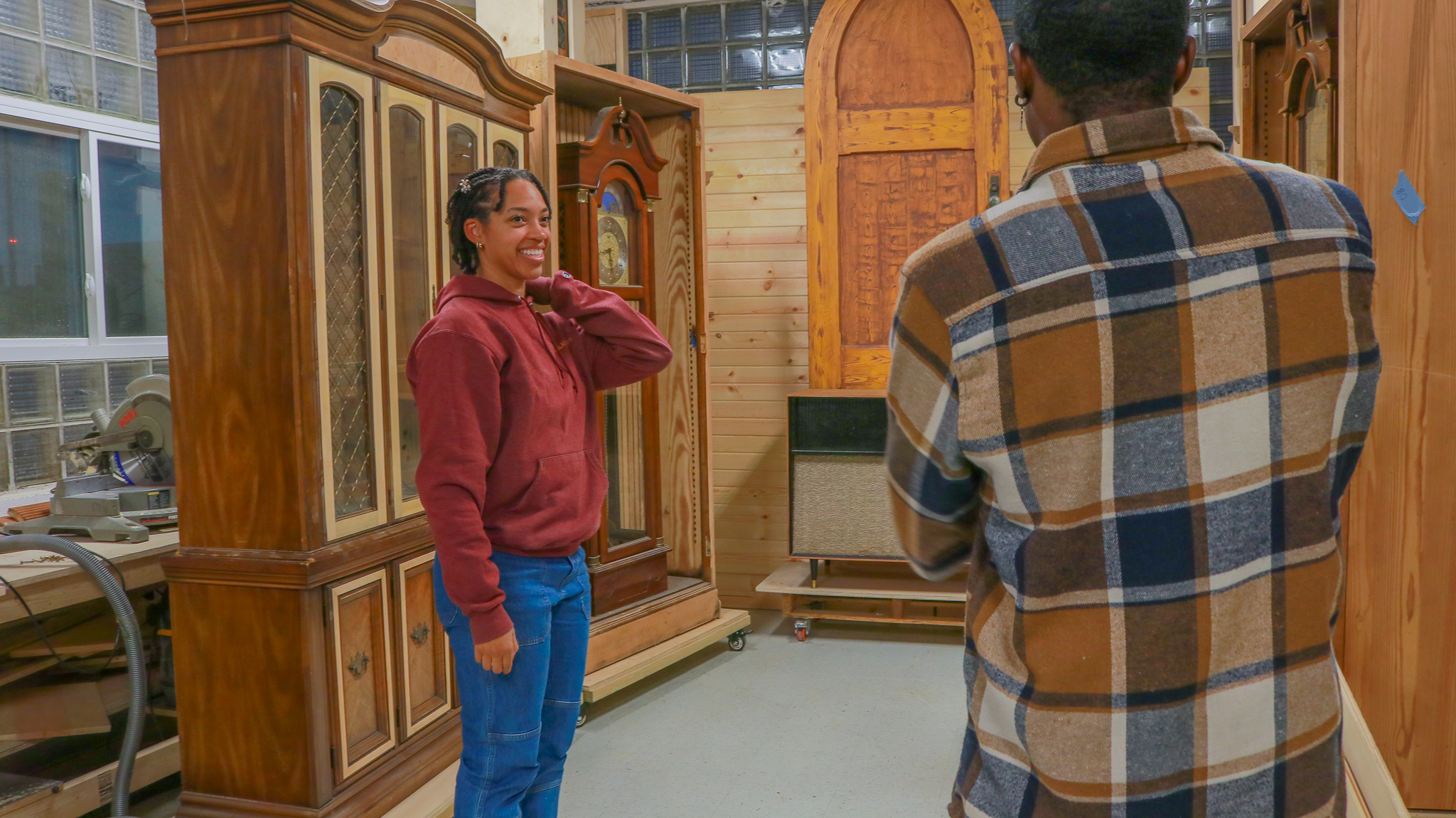
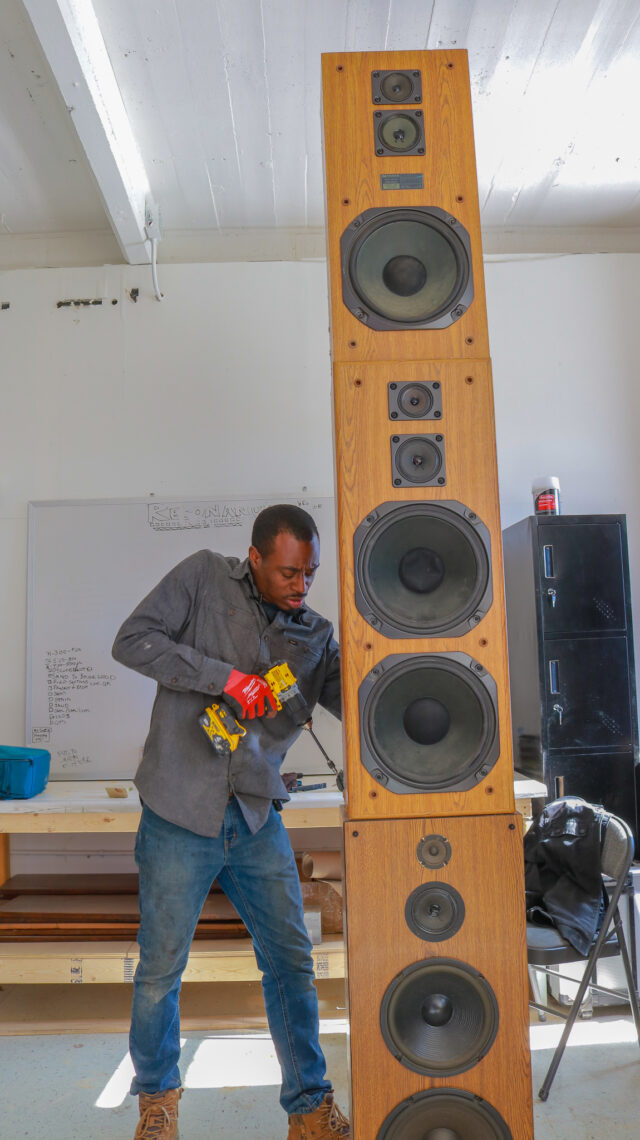
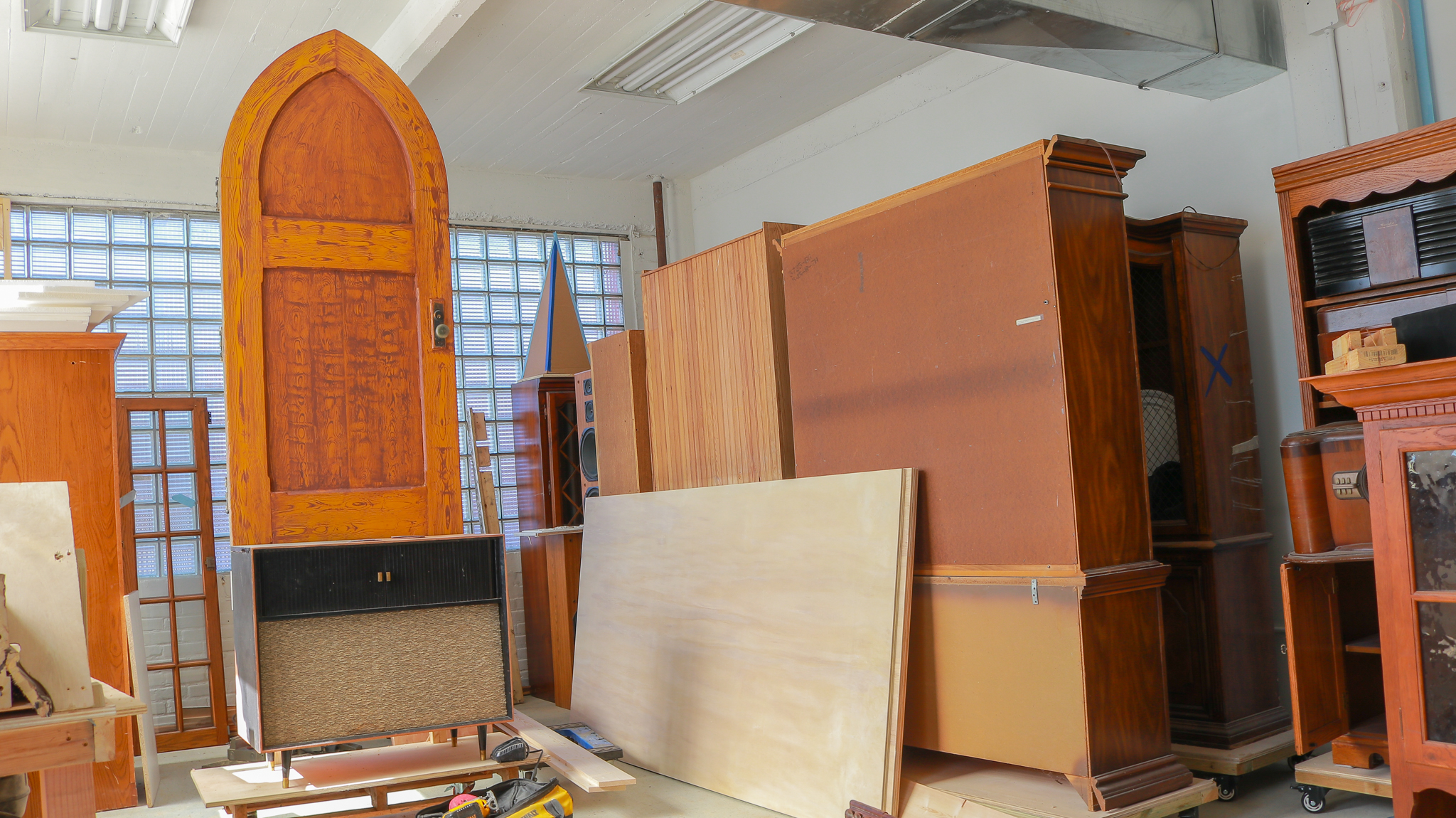
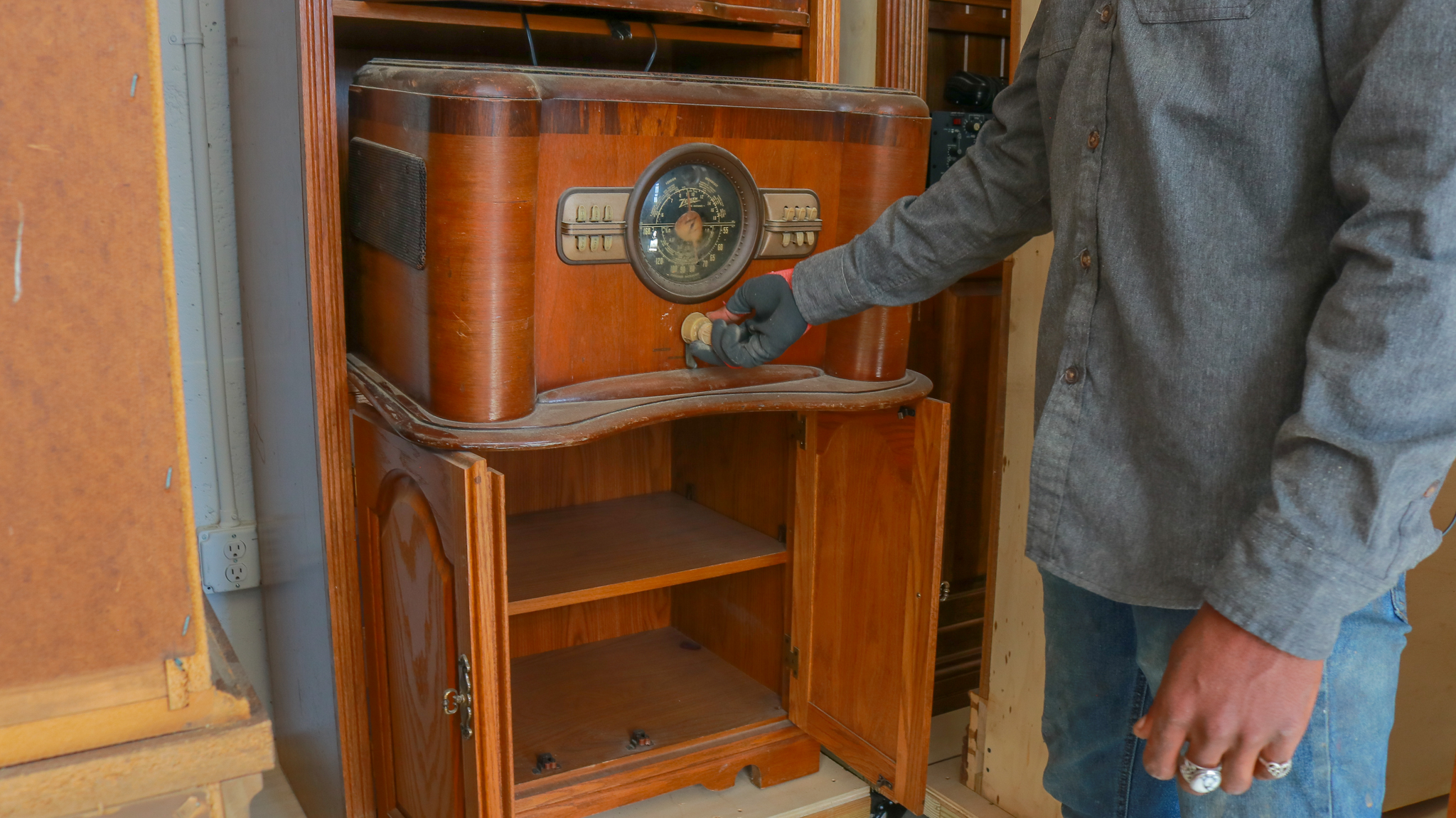
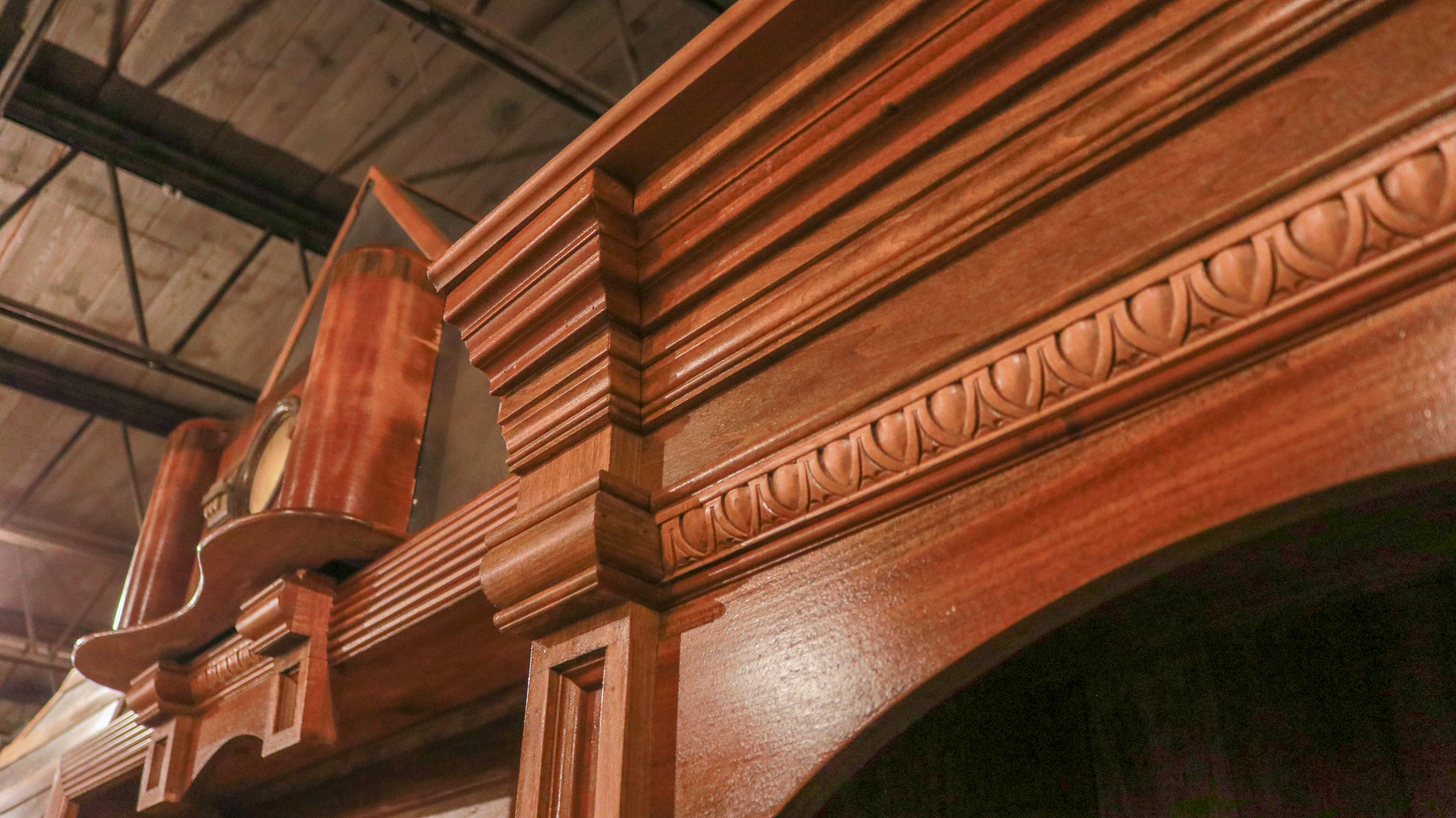
“Resonance” was built largely from reclaimed furniture and salvaged materials—cabinets, doors, speakers, radios, and music artifacts—each carrying its own history. Many of these materials were sourced locally through reuse efforts at Building Value, giving new life to objects that once served other purposes. Their past lives were not erased, but woven into the sculpture’s meaning.
At its core, this phase of the project was about trust and collaboration. As artists, builders, and founding members of Building Value’s Builders Club, Jordan and Sheridan exemplify what happens when creativity, craftsmanship, and material reuse intersect. This was only the beginning.


Putting It All Together
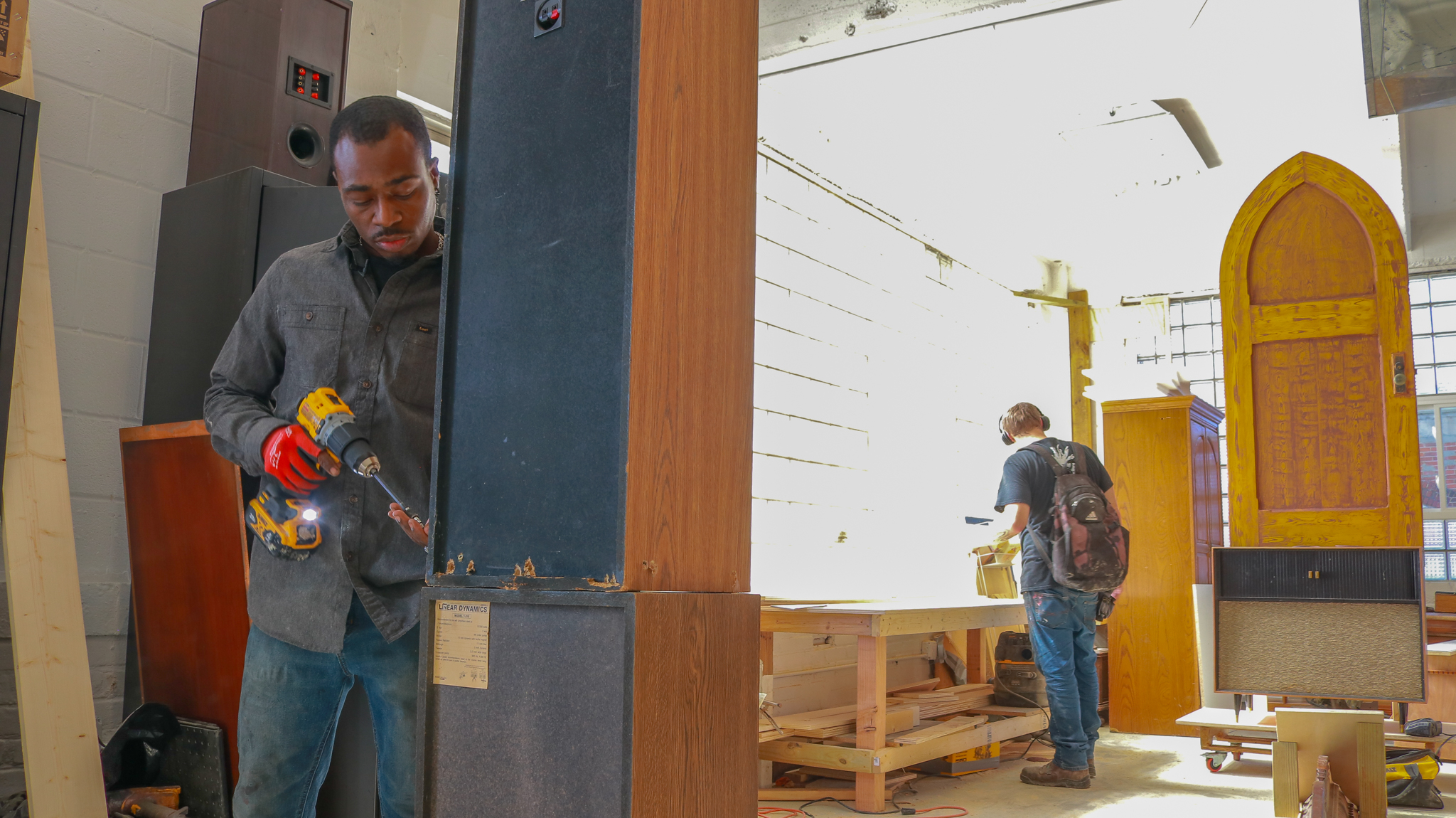
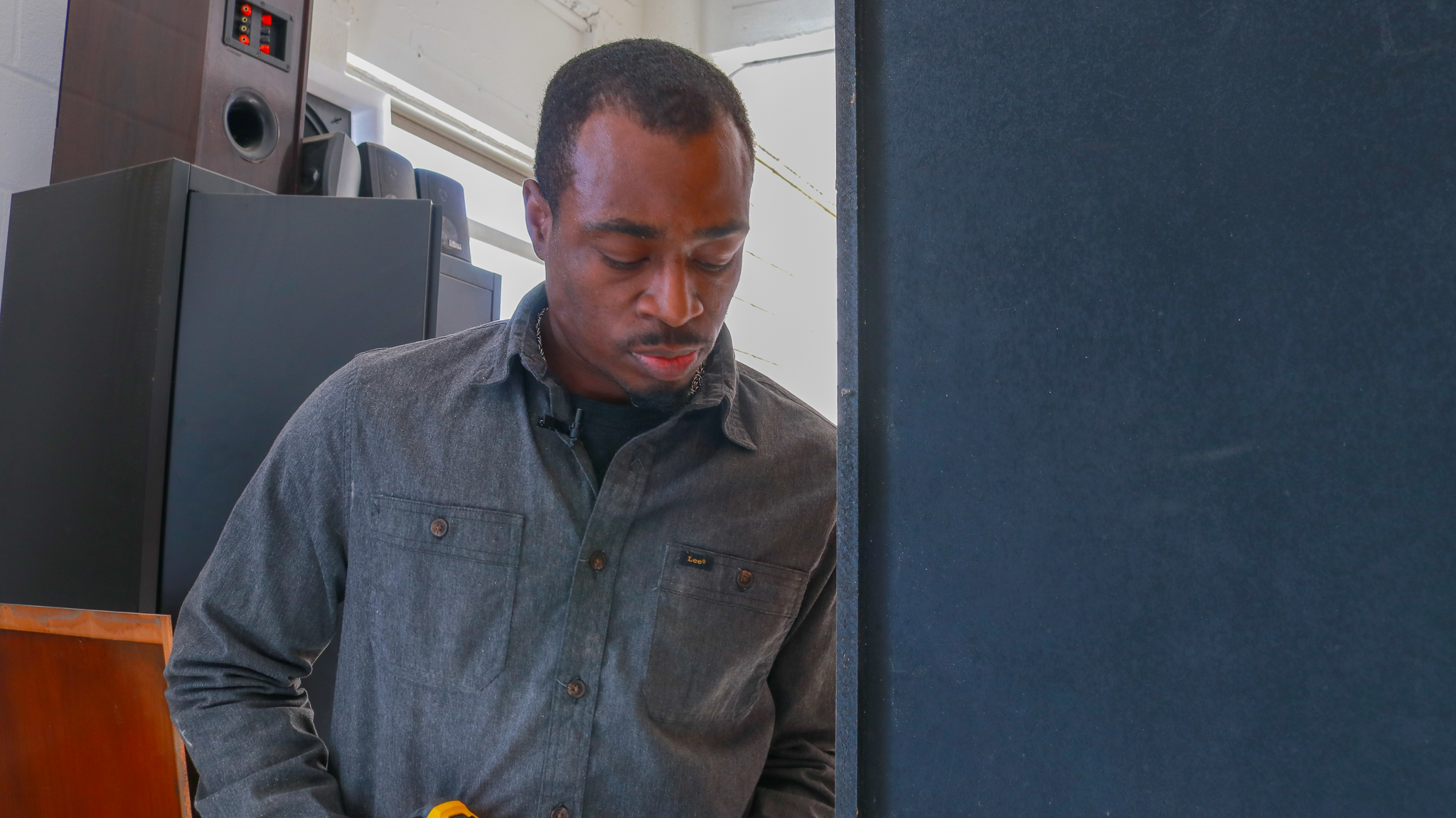
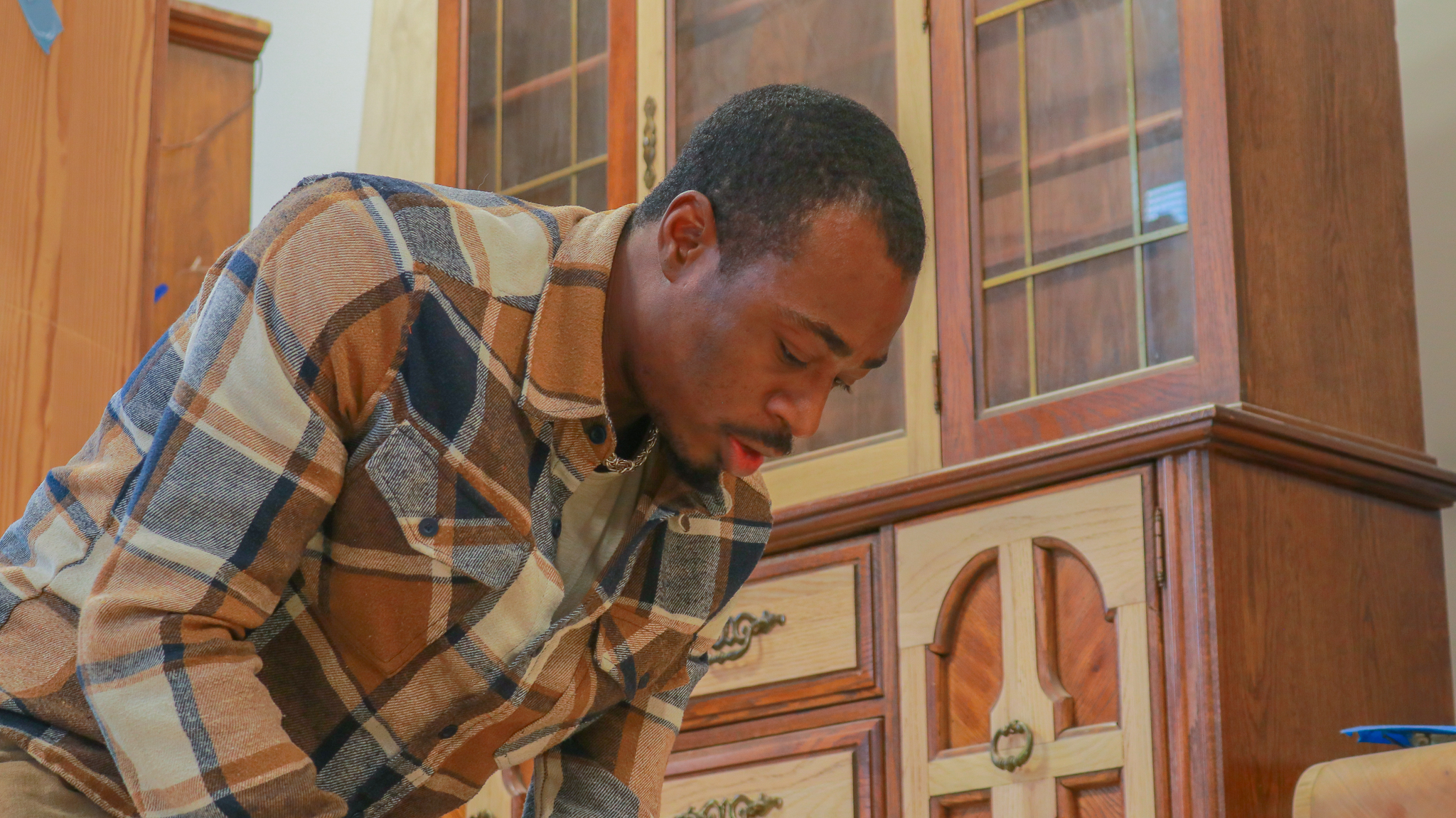
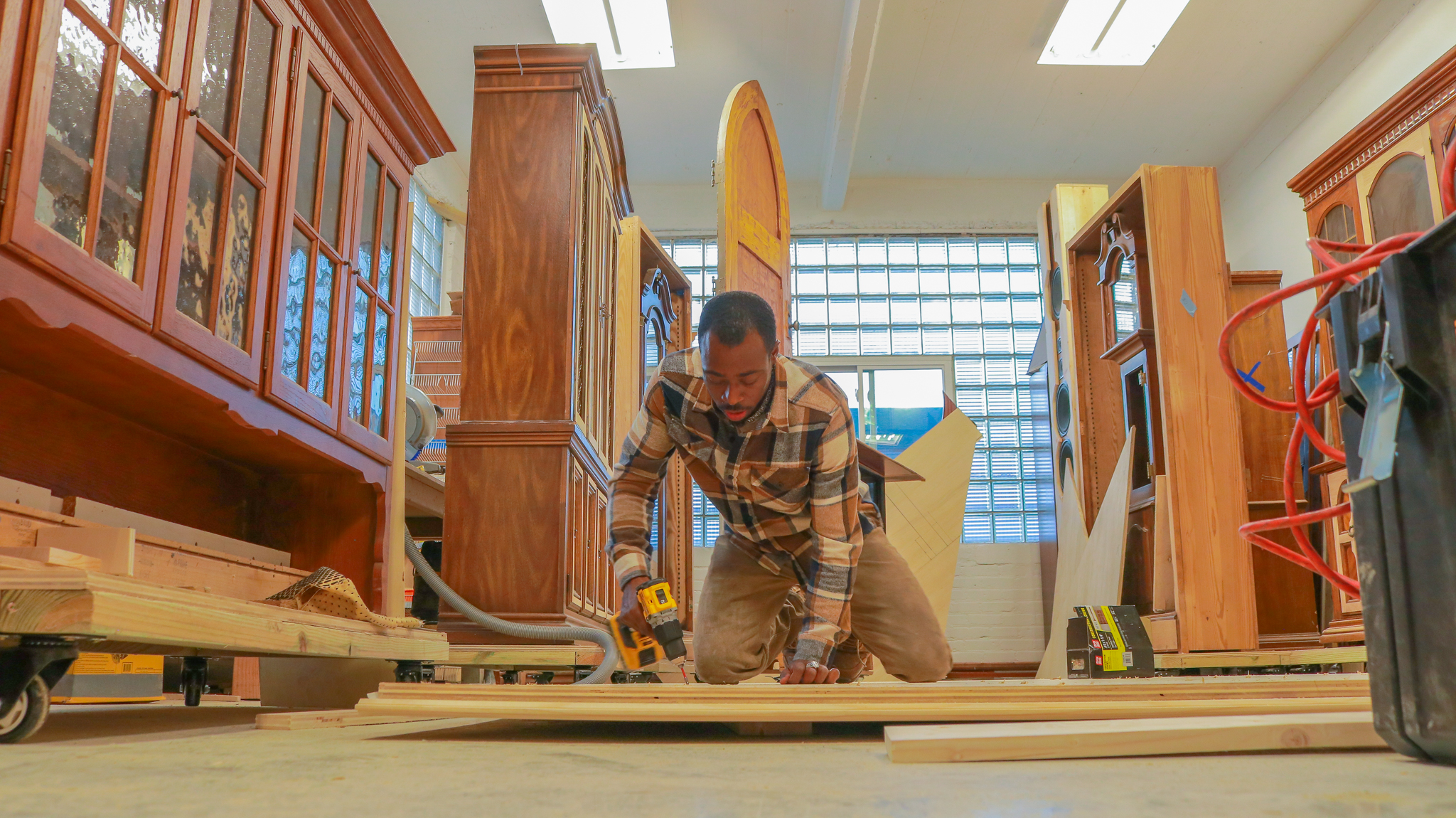
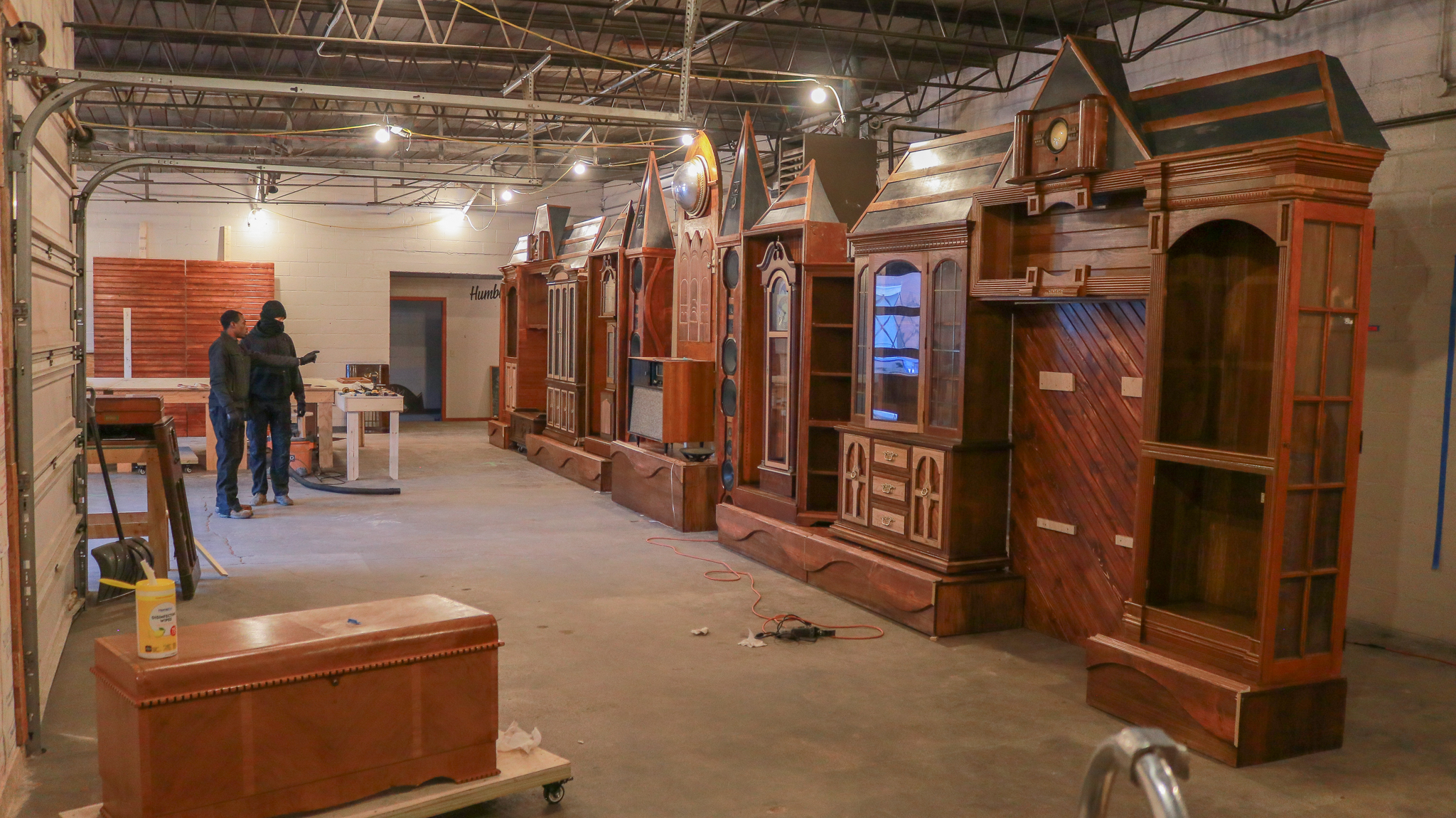
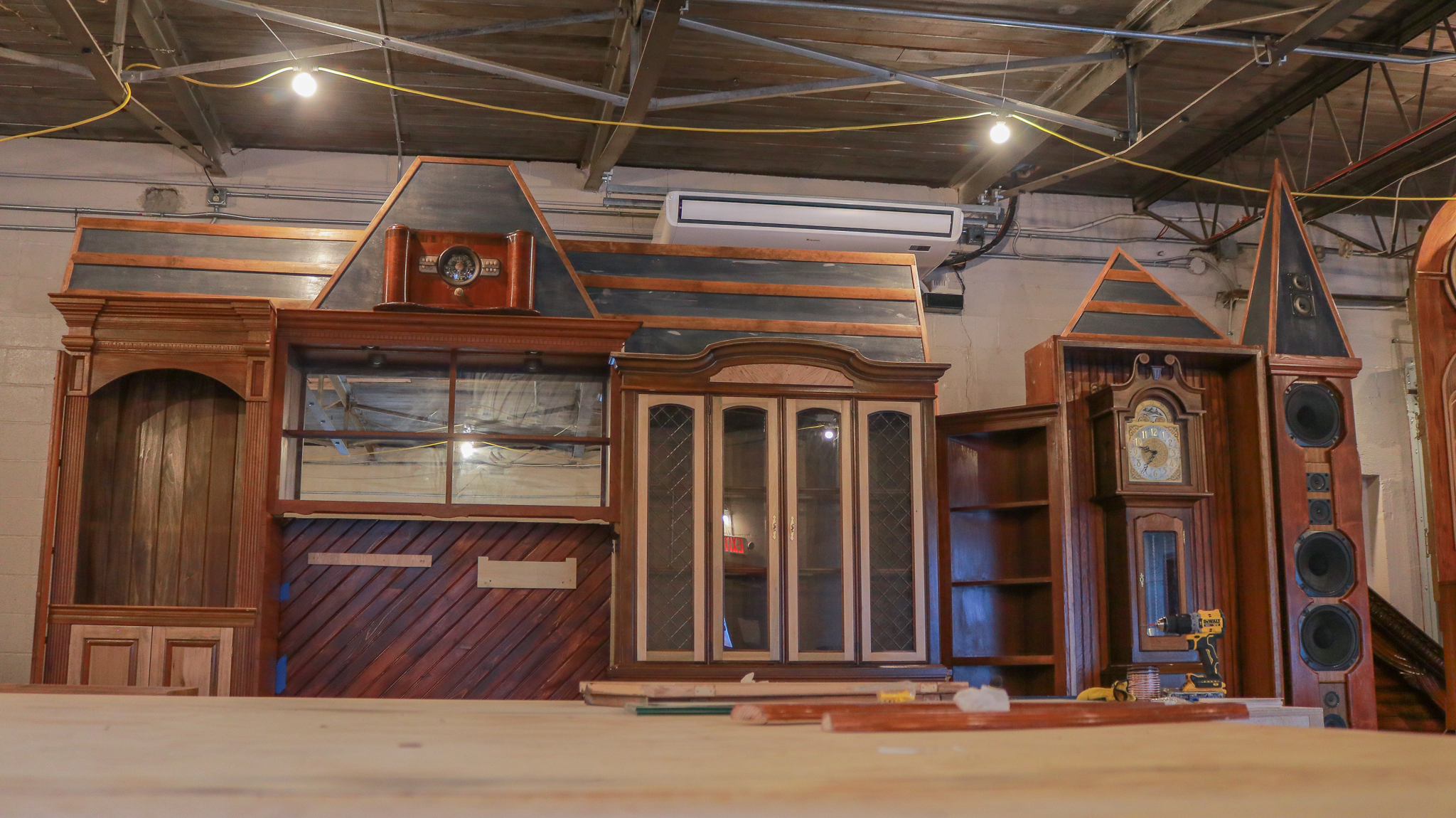
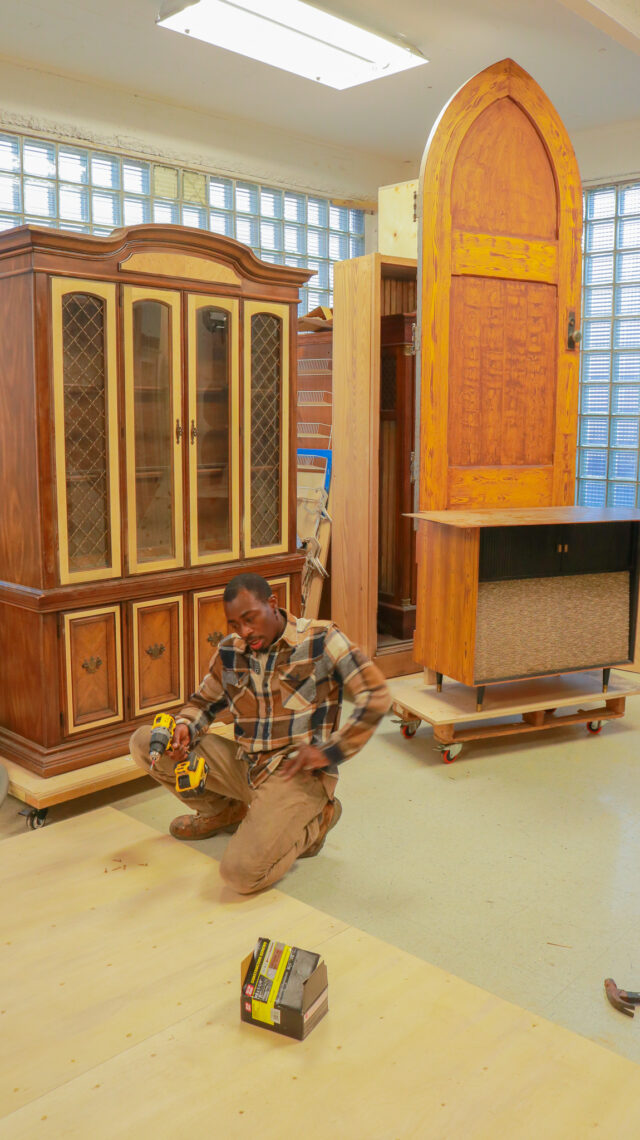 The build phase is where imagination takes weight and form. For “Resonance,” that moment unfolded inside Jordan Harris’s workshop in Northside, where he and Sheridan began assembling the piece by hand.
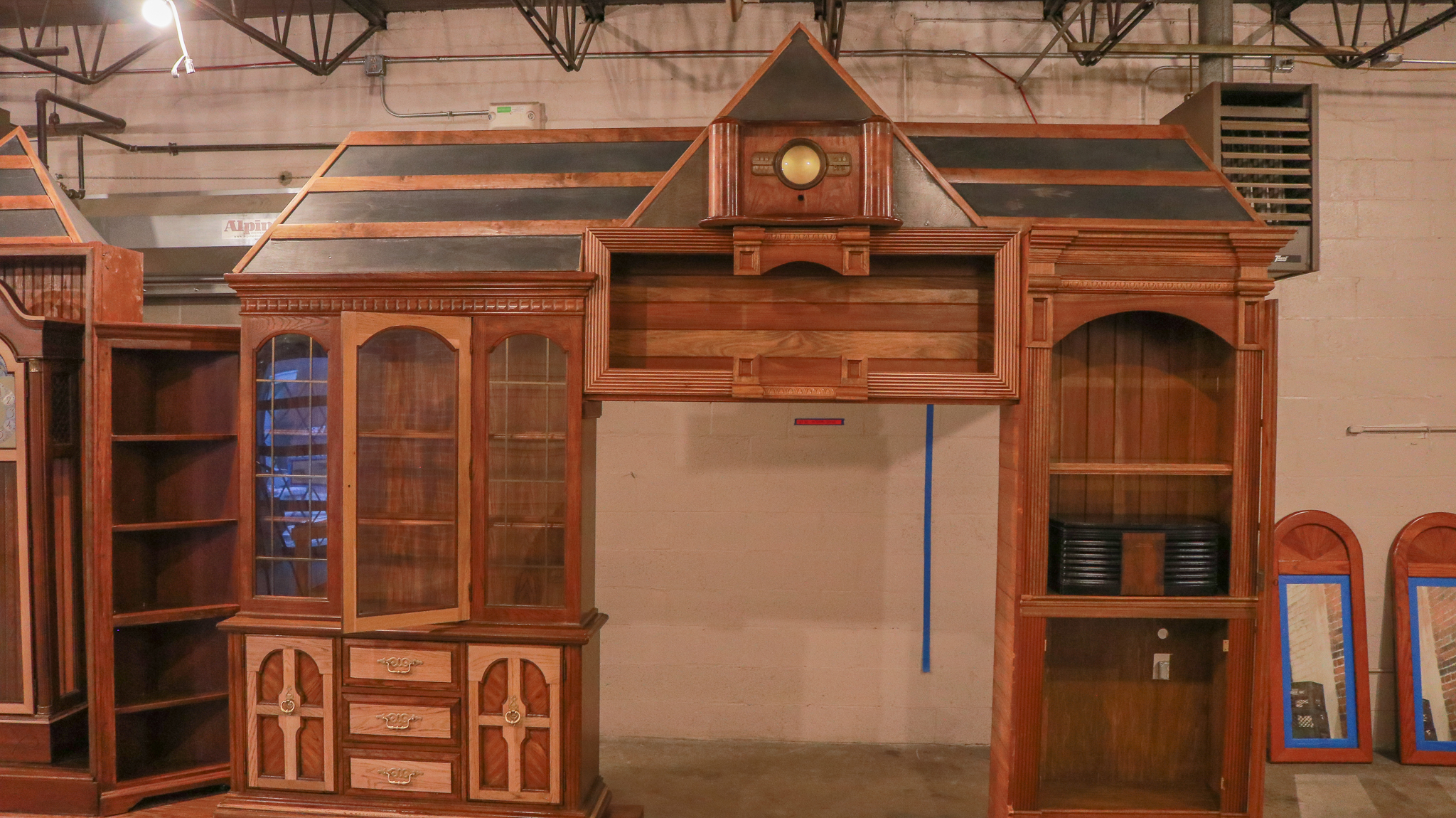
Side by side, the project moved from sketches to structure. Cabinets became walls. Shelves found new purpose. Curves and lines emerged, and the sculpture began to unmistakably echo Cincinnati Music Hall—its symmetry, presence, and sense of place.
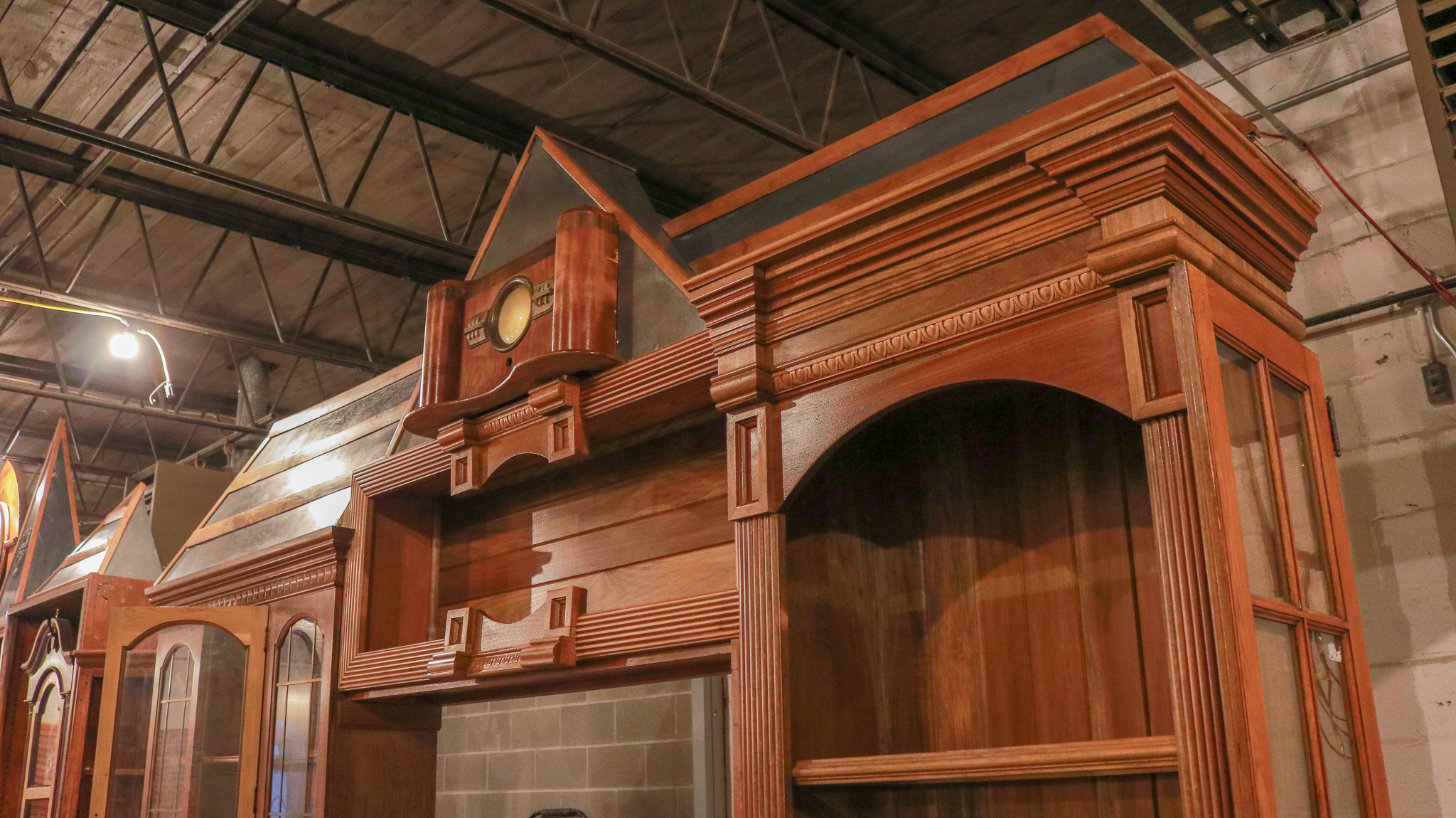
The materials arrived with past lives—furniture, doors, speakers, and architectural elements sourced through Building Value and other reuse stores—but it was the artists’ creativity and problem-solving that transformed them. While the before-and-after is striking, the real magic lives in the hands that shaped the work.
Supported by Black Art Speaks, this phase required long hours, constant adjustment, and a shared commitment to honoring the original vision. What began as individual elements scattered across a workshop slowly came together as a unified structure—one built with intention, patience, and heart.
Before:
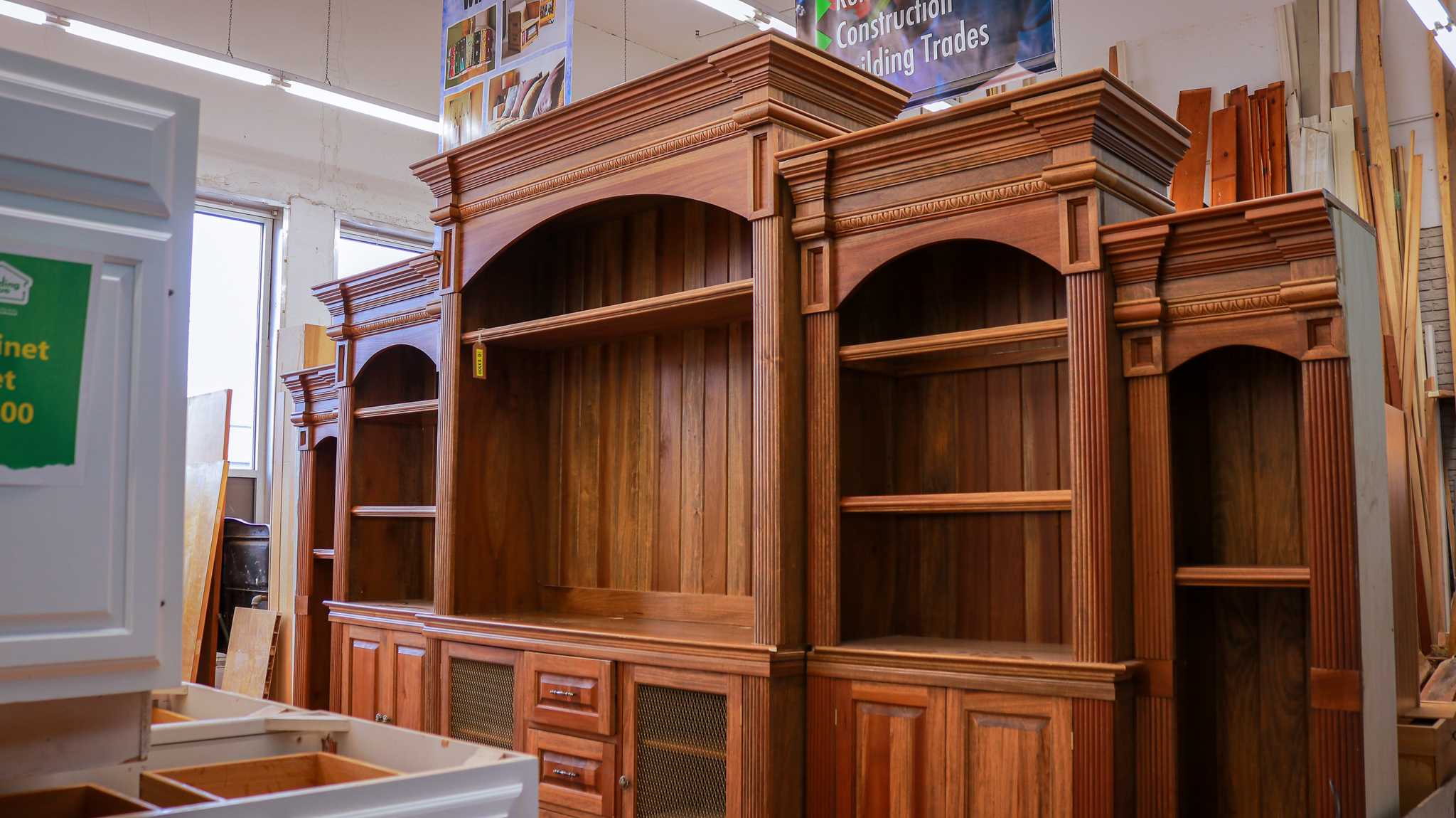
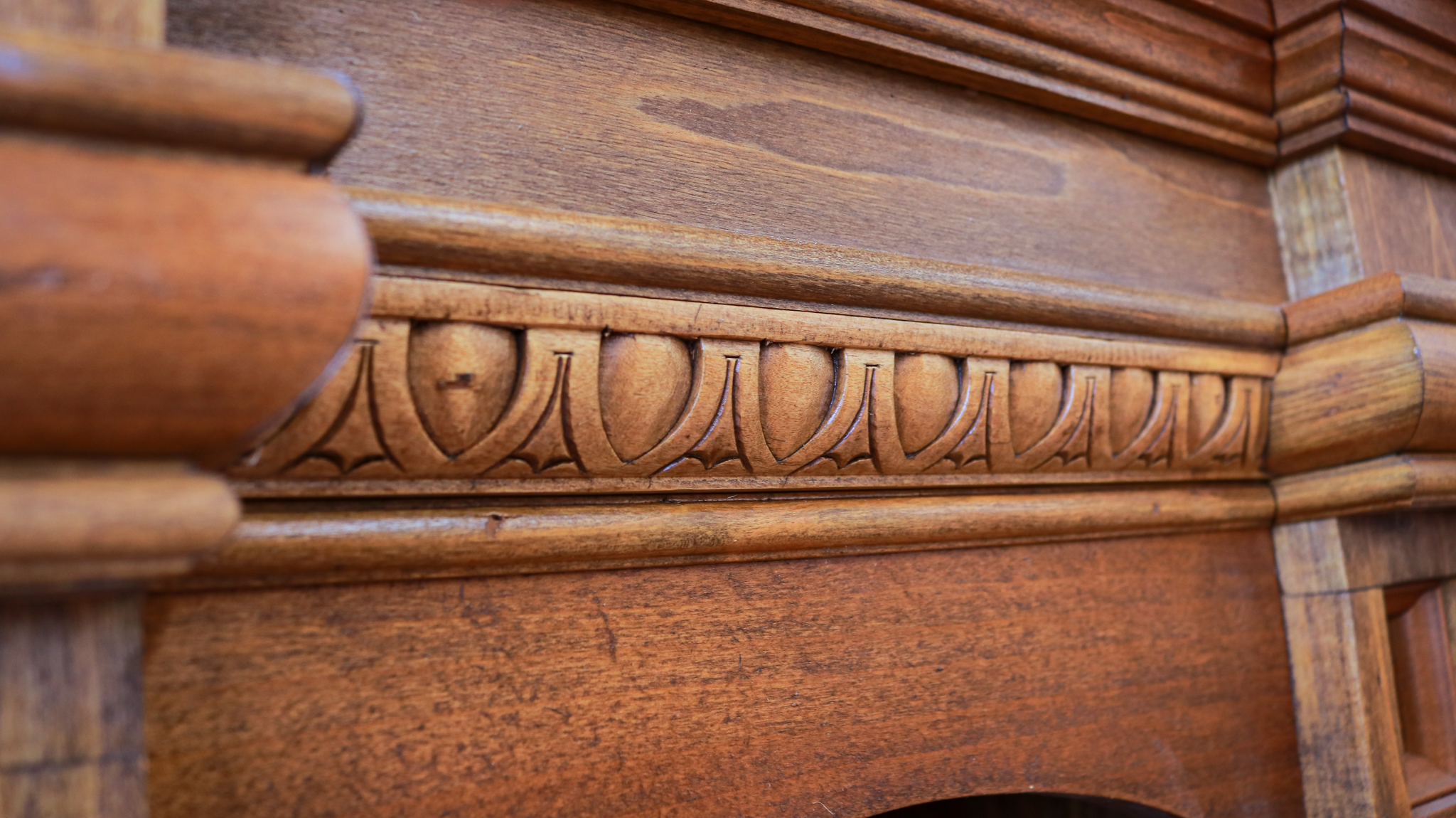
After:
The Reveal
After months of tireless work and collaboration, “Resonance” was ready to step into the public eye.
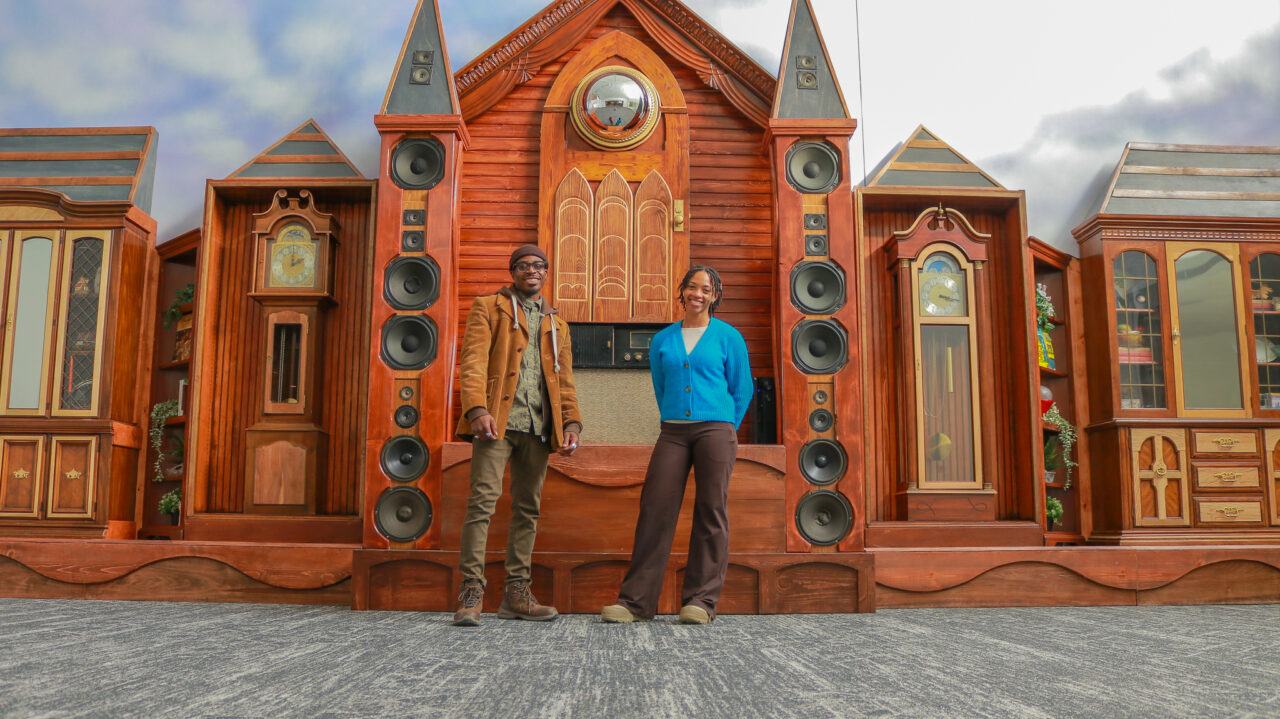
Building Value was honored to celebrate the completed installation by Jordan Harris and Sheridan Davenport, now unveiled at the newly renovated First Financial Center (formerly the Duke Energy Convention Center). The piece can be experienced on the third level of the building.
Adorned with vinyl records, cassette tapes, and music-inspired objects, “Resonance” calls back to Cincinnati’s deep musical roots. At its center is a vintage record player featuring a rotating selection of music from the city’s legendary King Records, along with other local selections. Visitors are invited not just to observe the piece, but to engage with it.
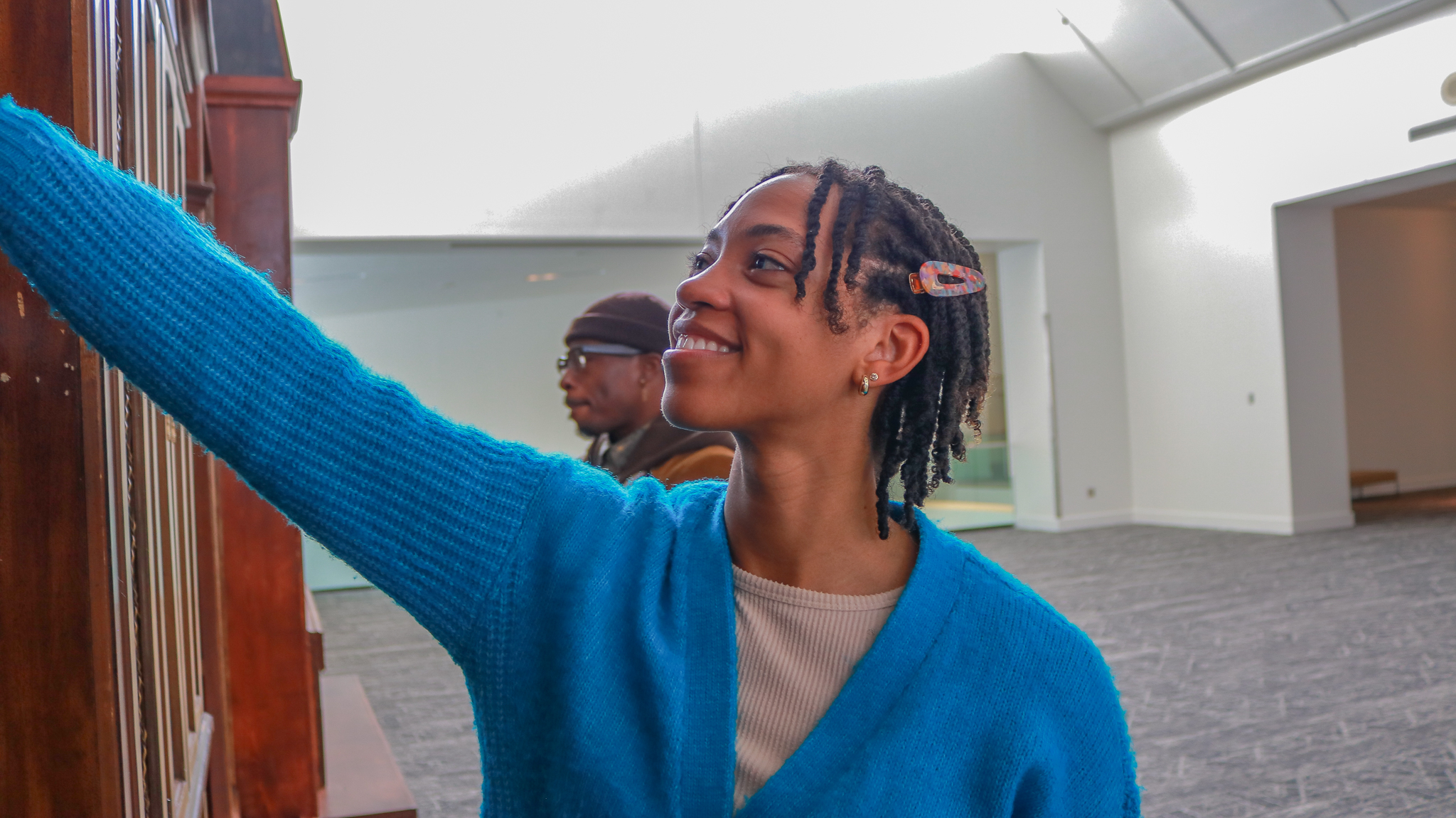
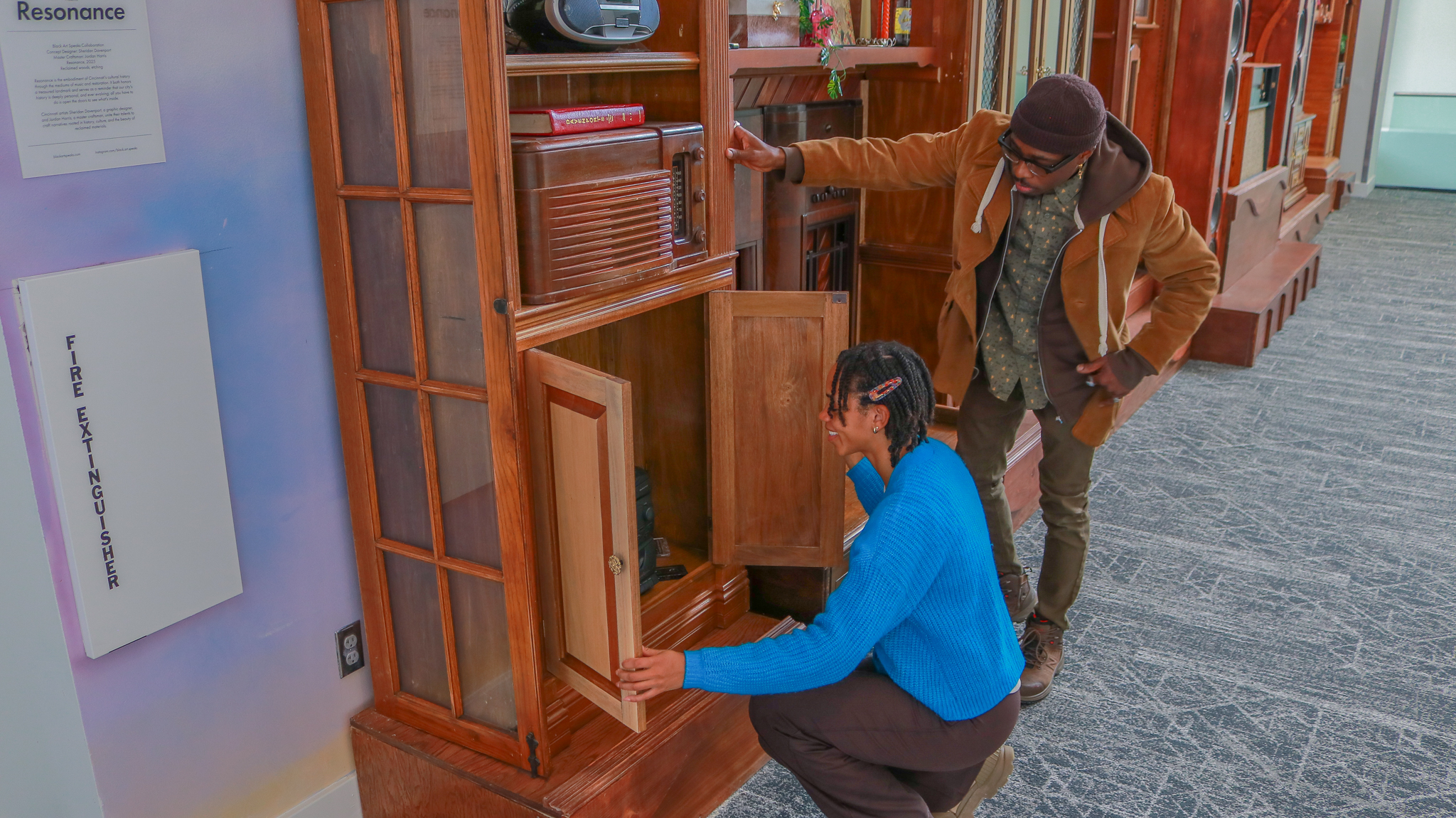
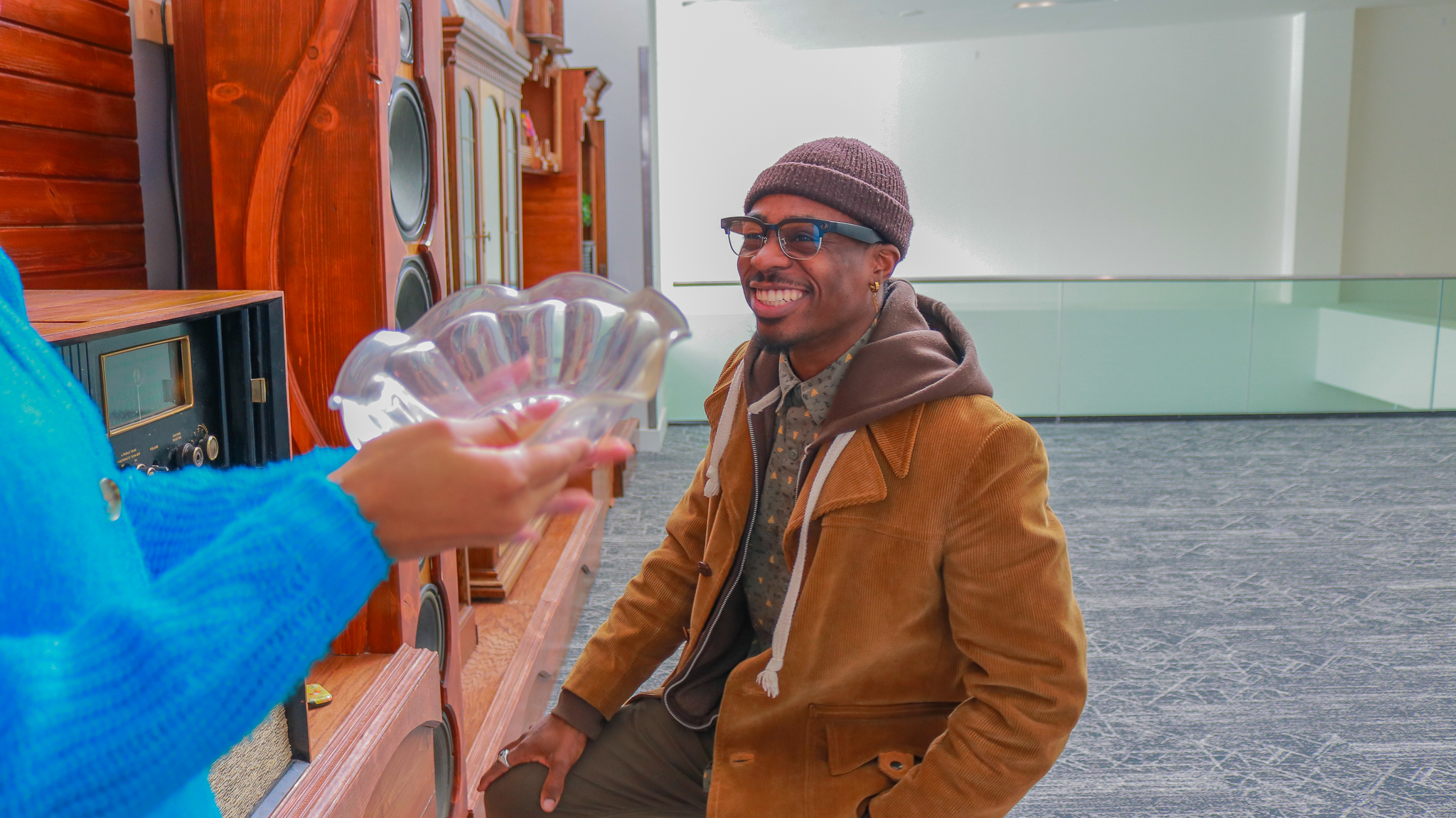
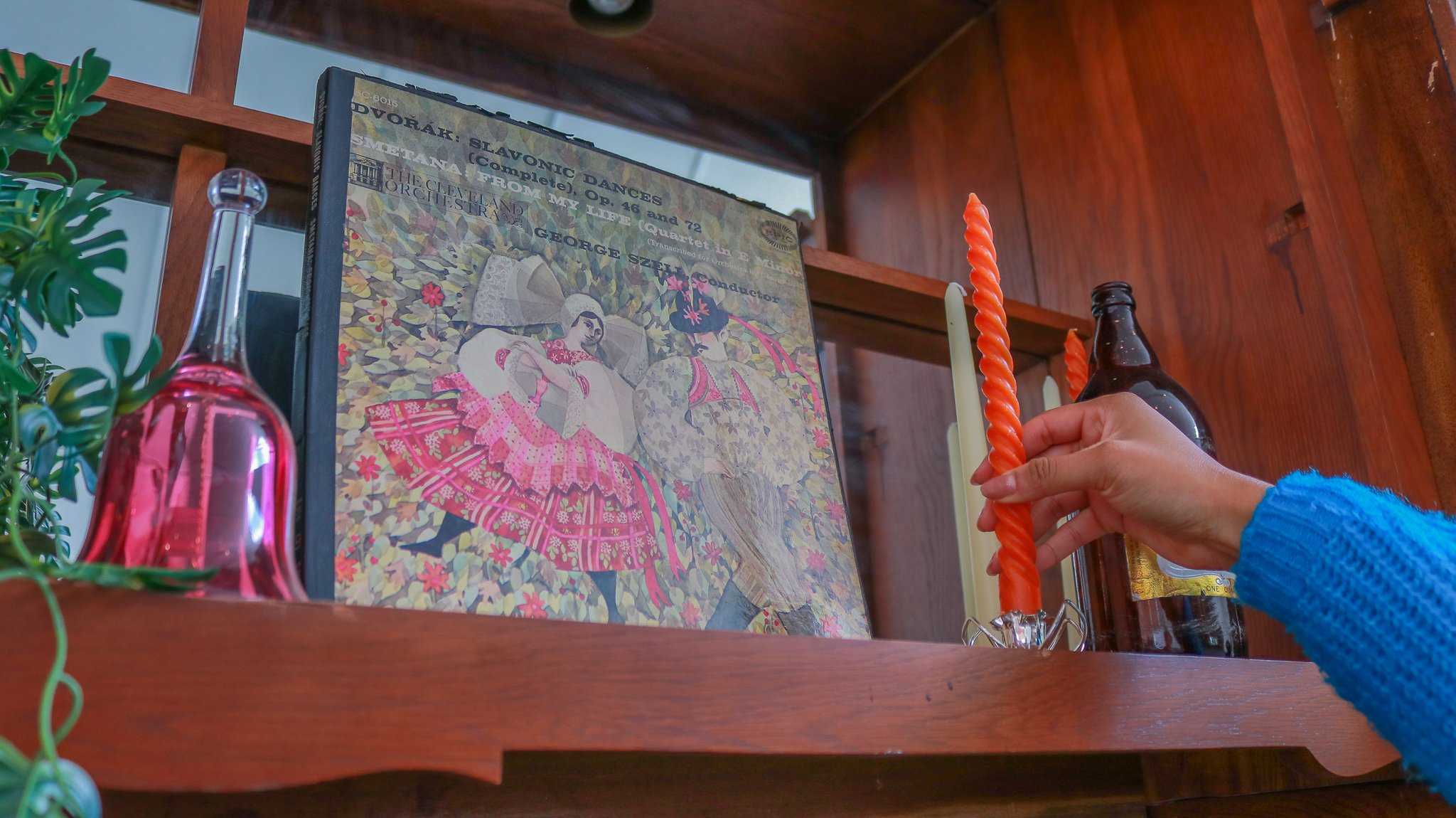
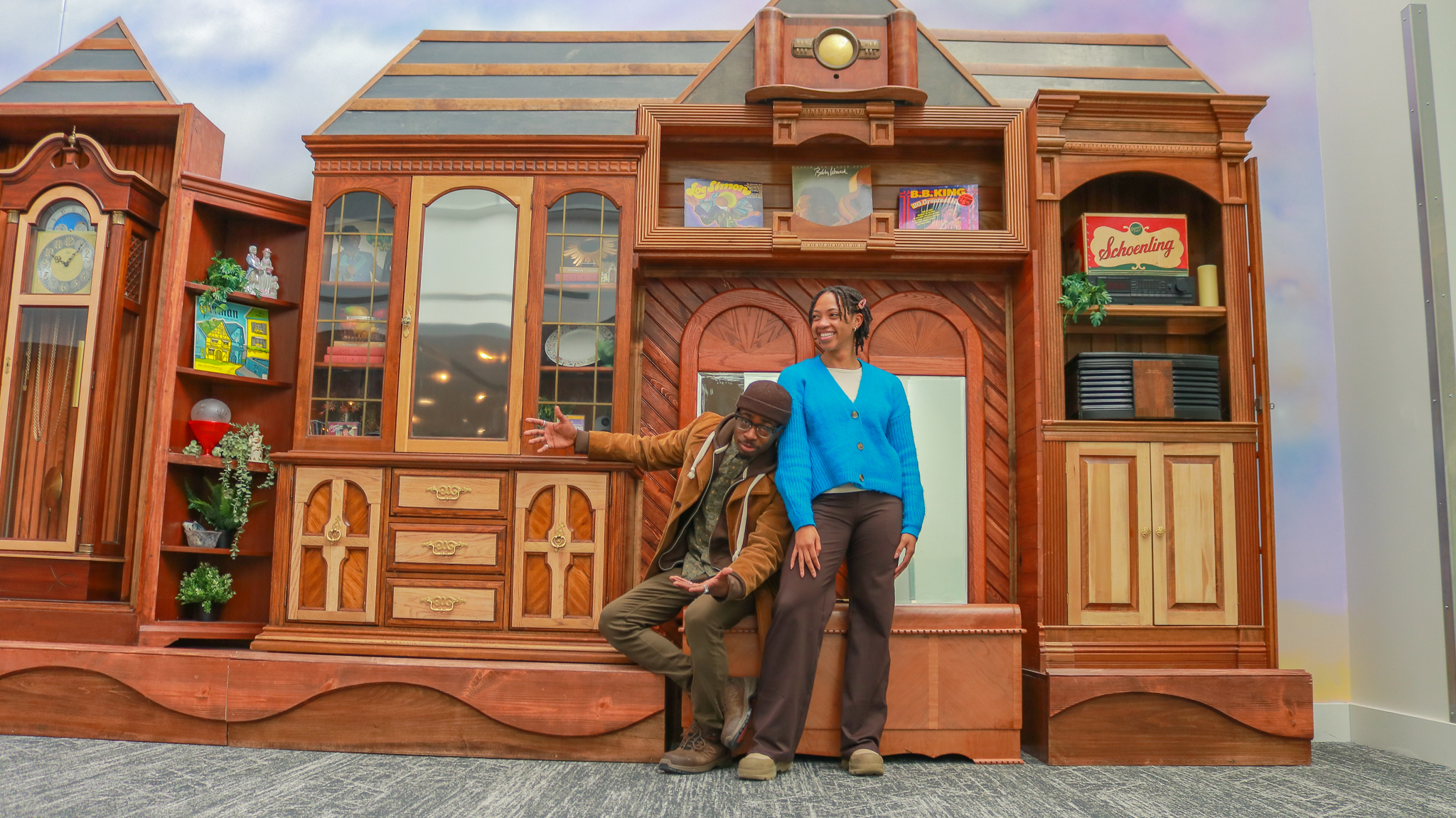

This installation is meant to be touched, examined, and experienced — an interactive tribute to the rhythms that have shaped Cincinnati and continue to resonate through it today. Jordan and Sheridan encourage respectful exploration of the tactile elements as a way to spark connection and curiosity.
From concept to installation, Black Art Speaks played a vital role in championing this work, helping ensure that art rooted in Black creativity and Cincinnati’s cultural history has a permanent, public home.
If you’re attending an event at the First Financial Center, make time to visit the third floor and experience “Resonance” for yourself. It’s a powerful reminder of what’s possible when art, reuse, and community come together — and a piece well worth lingering with.